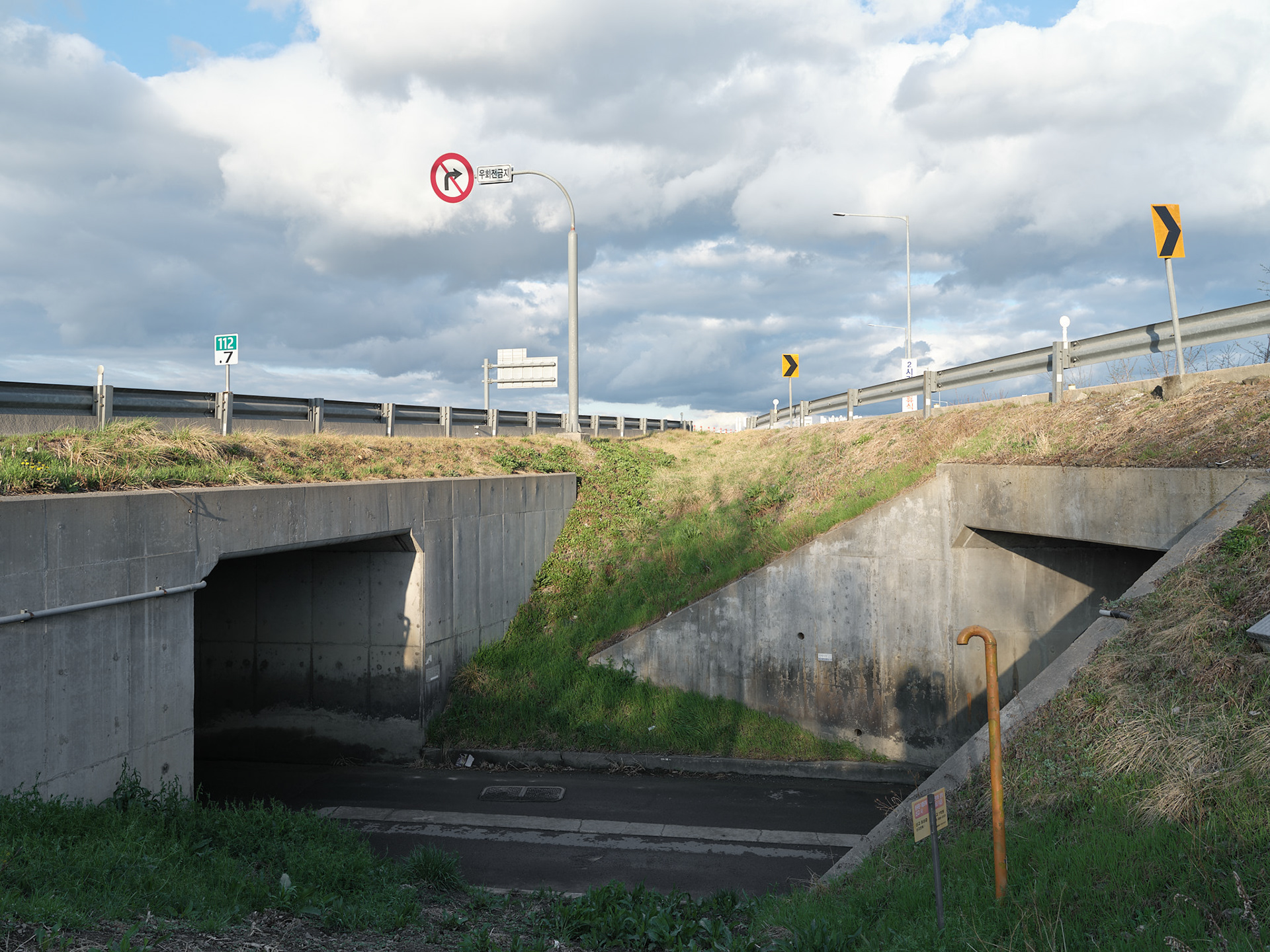
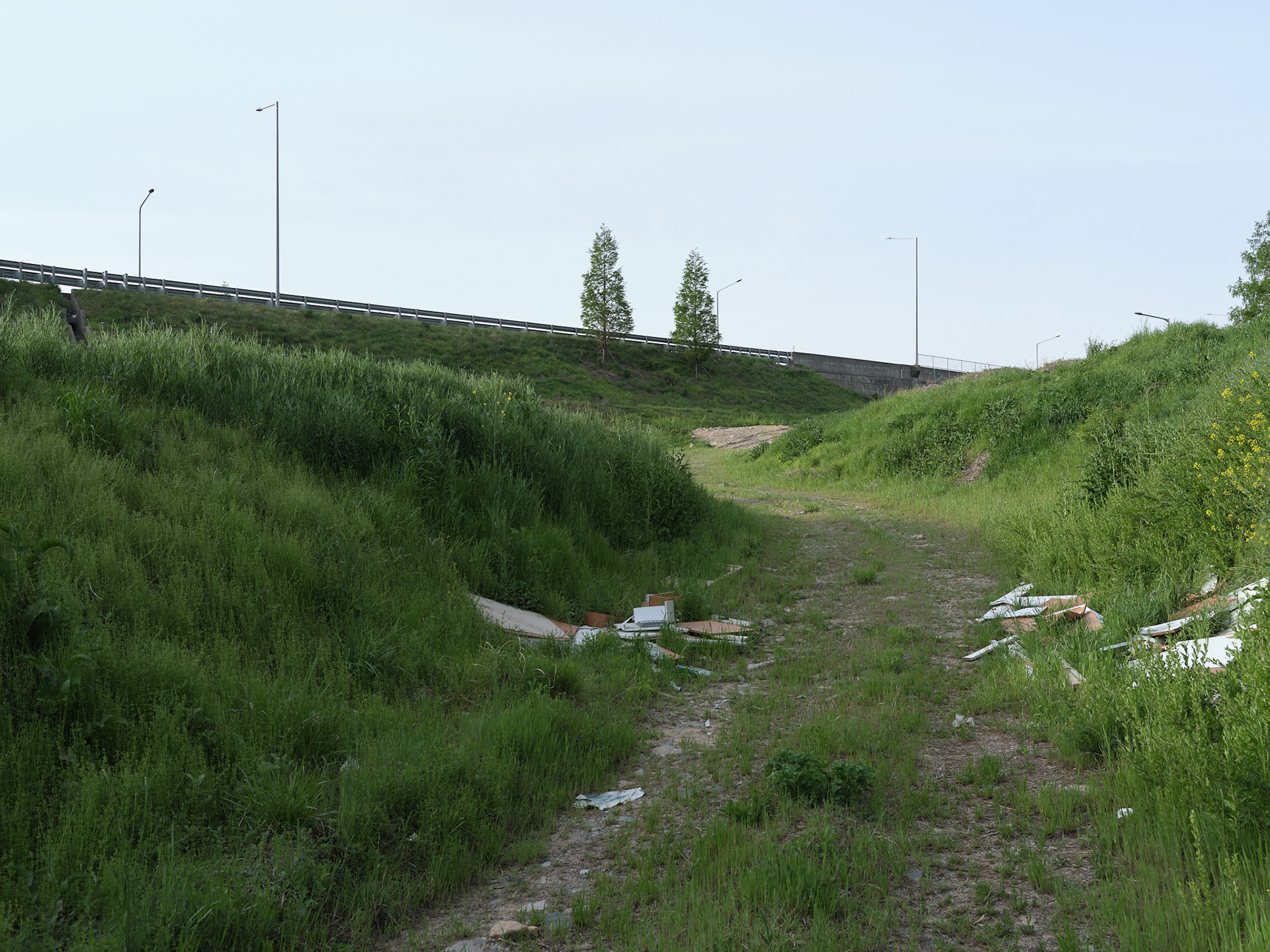
Highways function as non-places, yet within them exist interstitial spaces that lie outside their intended function. Between ramps, along boundaries, and around junctions, residual spaces emerge as byproducts of the infrastructure of movement. Though not defined by a specific purpose or use, these places persist with their own distinct atmosphere.
These spaces are observed and recorded without intervention. Rather than being occupied through use, they are engaged through acts of perception. Through repeated observation, the same sites reveal themselves differently over time, shaped by shifting light, weather, and seasons.
While they may appear empty, these interstitial spaces continually accumulate change. Existing in a state that resists fixed definition, they remain open to multiple readings and interpretations.